What is the target?
Here follows the main areas of the National professional standards for teachers regarding ICT elaborations for graduate teacher standards put forth by the Australian institute for teaching and school leadership:

My competency of each can be viewed from my previous posting:
Digital Tools Group 1
What are Web 1.0 or something?
Web 1.0 | Web 2.0 | Web 3.0 | |
Description: | Static websites can only be modified by the webmaster, it may contain text, images, video and other multimedia | The software is owned by a third party, but the information is contributed by the user and then shared with others (usually) on the same software. E.g. YouTube would not exists without public contributions | Intelligent life on the web or semantic web where “I want to see a horror movie and eat chicken”, and even though you are in a new town the search will produce results to your liking and cater for “allergies” and distance to travel |
Analogy: | A third party instinctively caters to each person’s desires instantly |
Is there a Web 3.0?
Expanded PMI of Static websites, Blogs and Wikis:
Static website | Blog | Wiki | |
Definition | Static websites can only be modified by the web-master, it may contain text, images, video and other multimedia, related to a specific topic or company | Abbreviated from web-logs – contains entries (by one person or group of contributors) in (reverse) chronological order | Multiple users can collaboratively & effortlessly modify information (including that contributed by others) on a web page (depending on purpose/privacy) without restriction |
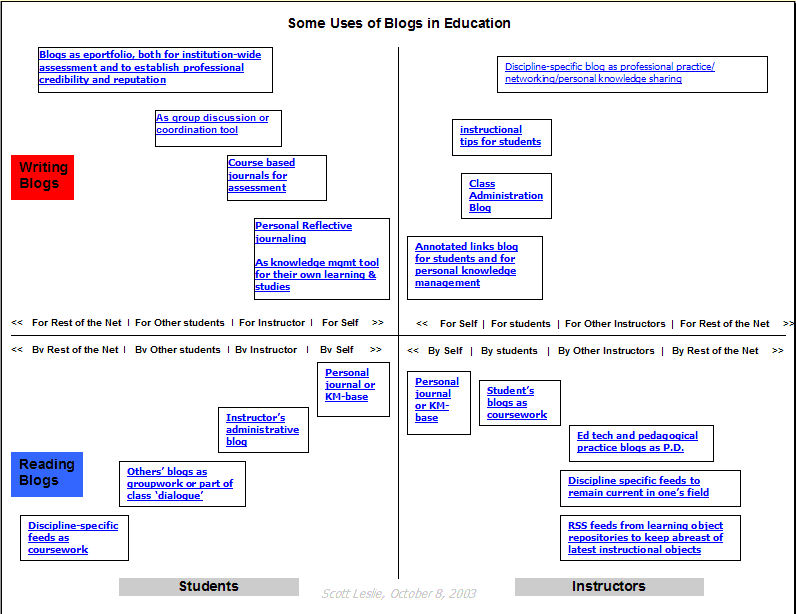
Plus | · Digital age literacy · Inventive thinking · Higher-order thinking · Effective communication | · Worldwide Audience · Knowledge construction · Enhance reading, critical thinking and writing | · Resource creation · Student participation · Student interaction · For the classroom · Community |
Minus | · Analysis & specification of resources · Raising quality · Cost involved · Equity of access · Language content | · Educational vs. insightful vs. chit chat vs. blathering · Becomes messaging vs. dialogue · Misinterprets “voice” tone | · Is content valuable when it’s subject to the impulses of contributors or suspicious intent? · Require online connection · Disorganisation |
Implications | · Investigating reality and building knowledge · Active learning and authentic assessment · Engage students by motivation & challenge · Provide scaffolding to support higher level thinking · Increase learner independence · Collaborative & cooperative learning · Tailoring learning to the learner · Overcome physical disabilities | · Provide posting guidelines · Provide HTML support · Give priority to student commentary · In class summarising & moderating discussions | · Recent changes page · Using as a Source · Contribute at different times & locations · Collaborating ideas & resources · Presentation tool · Manage documents |
Classroom use | Learning about/with/through the “internet” to achieve multi-modal literacy, across curricular learning and curricular applications. | May be used by learners or educators for reading or writing blogs. | · Class wikis o Collaboration o Webquest o Online content · Professional learning communities o Professional research o Virtual training o Curricular collaboration o Supporting teachers |

No comments:
Post a Comment